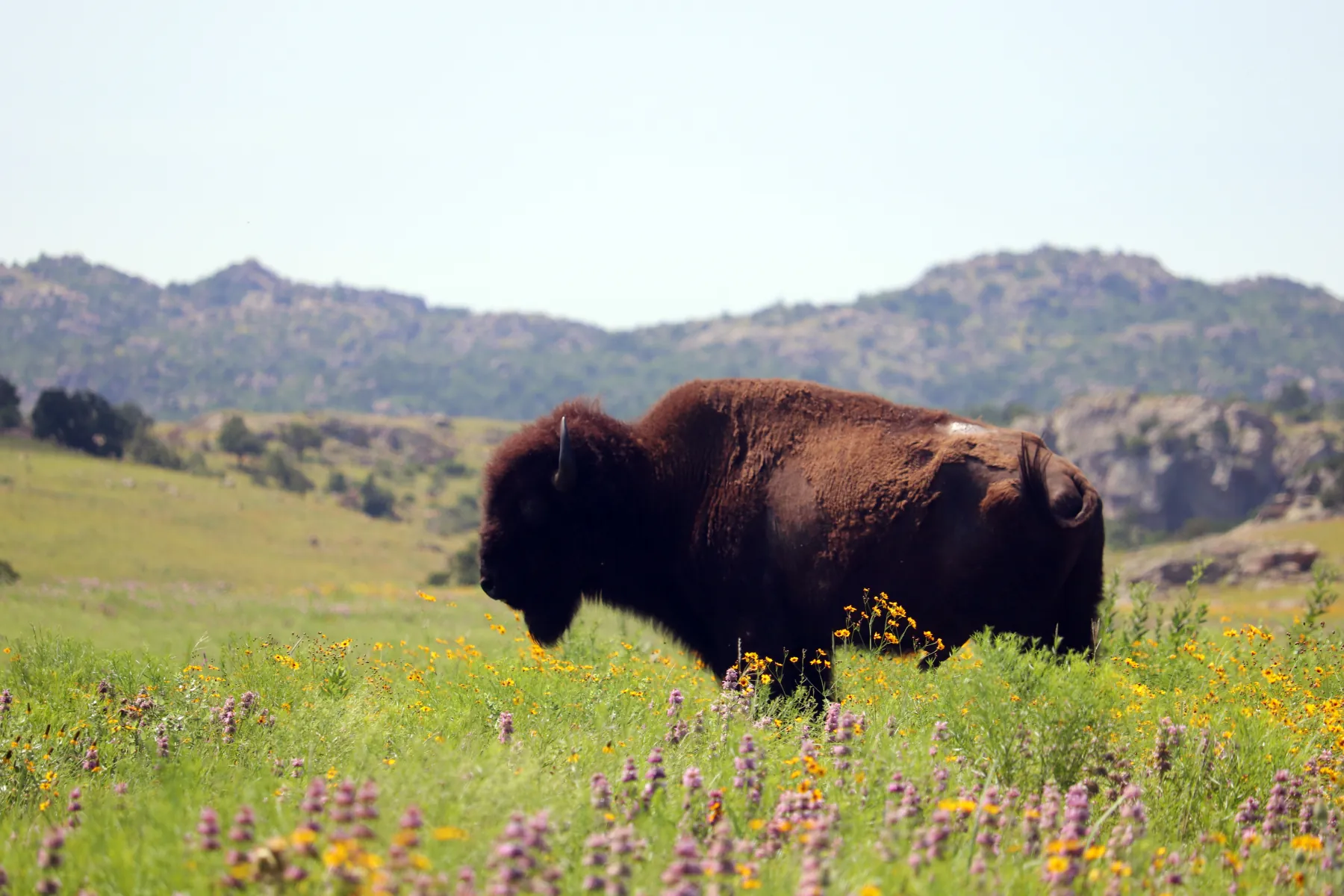
For a first visit, start with the live U.S. Fish & Wildlife Service page, not a saved itinerary. The refuge covers 59,020 acres, but only part of that landscape is managed for public use, and safety orders can temporarily narrow what is available. At this update, hiking is allowed only from sunrise to 10 a.m.; every hiker must be off trails and the Mount Scott roadway by 10. Build the day around one early route, the Visitor Center, a scenic drive, and a picnic or wildlife-viewing stop. Bring all drinking water, download the map, and leave room for closures, crowds, free-roaming animals, and changing weather.
What is the current refuge status?
An extreme-heat order is active until further notice. Hiking is limited to sunrise–10 a.m.; after 10, hiking is closed and hikers must have exited every trail and the Mount Scott roadway. Roads remain open to motor vehicles and bicycles, and routine picnicking and fishing continue. Backcountry camping is not allowed under the order. Recreation.gov also currently says wood-burning fires are prohibited, with charcoal and gas grills allowed only in designated areas.
Should you begin at the Visitor Center?
The Visitor Center is the best orientation stop for a first visit when its schedule fits your day. FWS lists it at 21088 State Highway 115, open daily from 9 a.m.–5 p.m., with exhibits, maps, staff help, and a short refuge film. Because the current hiking window ends at 10, hikers should not wait for the center to open before starting an early trail. Instead, download the official map in advance, finish the route, and use the center afterward to add context or adjust the rest of the day.
How should you visit Mount Scott?
FWS recommends Mount Scott Road as a scenic drive, and Oklahoma Tourism describes a paved three-mile summit road with parking at the top. Vehicle access may change for weather, fire, maintenance, or crowd management. Under the current heat order, anyone walking the roadway must be off by 10 a.m. Treat the summit as a scenic stop, stay within open public areas, park only where designated, and check the refuge status before you turn toward the mountain.
What does wildlife change about the visit?
American bison, longhorn cattle, elk, deer, turkey, and prairie dogs are part of the refuge experience, not staged attractions. Stay in your vehicle when animals occupy the road, never move closer for a photograph, and do not place yourself between adults and young. FWS prohibits disturbing or collecting wildlife and natural objects. A route can pause or change because an animal is present; that is part of visiting a refuge responsibly.
What should you carry when cell service is unreliable?
Download the interactive map or official PDF before leaving reliable service, tell someone your intended route, and carry enough water for each person. FWS states that potable drinking water is not available in the refuge and that cell coverage is spotty, with Charon’s Garden potentially having none. Add sun protection, sturdy shoes, basic first aid, and a charged phone, but do not make the phone your only navigation plan.
Which standing rules surprise first-time visitors?
Pets must remain under direct control on a leash shorter than 10 feet and cannot be left unattended in vehicles. Drones, ATVs, UTVs, golf carts, fireworks, alcohol, and collecting rocks, plants, antlers, bones, or artifacts are prohibited. Caves, tunnels, mines, and sinkholes are closed. Park only on paved or hardened designated surfaces. General public trailheads and pullouts close after sunset unless a specific permitted use applies.
What is a resilient first-day sequence?
Arrive with the official map already saved. If conditions permit, complete one short trail at sunrise and be back at the vehicle with ample margin before 10. Continue to the Visitor Center, then choose Mount Scott Road, a lake overlook, Prairie Dog Town, Holy City, or a picnic area based on current access. End in Medicine Park or return to Lawton rather than squeezing in another trail. The quality of the day comes from reading one landscape well, not collecting the most pins.
Quick answers
Frequently asked questions
Does the Wichita Mountains Wildlife Refuge charge admission?+
FWS does not charge a refuge entrance fee. Camping and certain permits can carry fees.
Is drinking water available inside the refuge?+
FWS says potable drinking water is not available. Bring all the water you will need.
Can I fly a drone for landscape photographs?+
No. Unmanned aircraft are prohibited under the refuge’s current rules.
Sources & further reading
Accessed and reviewed Sep 10, 2026. Time-sensitive details should be confirmed at the source.
U.S. Fish & Wildlife Service — current visitor information↗U.S. Fish & Wildlife Service — interactive refuge map↗U.S. Fish & Wildlife Service — refuge laws and regulations↗FWS — about Wichita Mountains Wildlife Refuge↗Recreation.gov — Doris Campground alerts↗TravelOK — Mount Scott↗